
Few things are more frustrating than turning the key — or pressing the start button — and hearing nothing happen. A dead battery can ruin your morning commute, delay errands, or leave you stuck in a parking lot at night. The good news is that a dead battery is one of the most common and fixable car problems.
This guide explains exactly what to do when your car battery dies, how to restart your vehicle safely, and how to prevent it from happening again. You don’t need to be a mechanic to handle this situation — just follow the steps carefully.
First: Stay Calm and Check Your Surroundings
Before you assume the battery is dead, take a moment to assess the situation.
Safety always comes first. If your car won’t start in a dangerous location, your priority should be moving yourself somewhere safe.
If you are in traffic or on a roadside:
- Turn on hazard lights immediately
- Move the vehicle to the shoulder if possible
- Stay inside the car if traffic is heavy
- Call roadside assistance if unsafe to exit
If you are in a parking lot or driveway:
- Turn off all electronics
- Set parking brake
- Open hood only after vehicle is secure
Now you can confirm whether the battery is actually the problem.
Signs Your Battery Is Dead
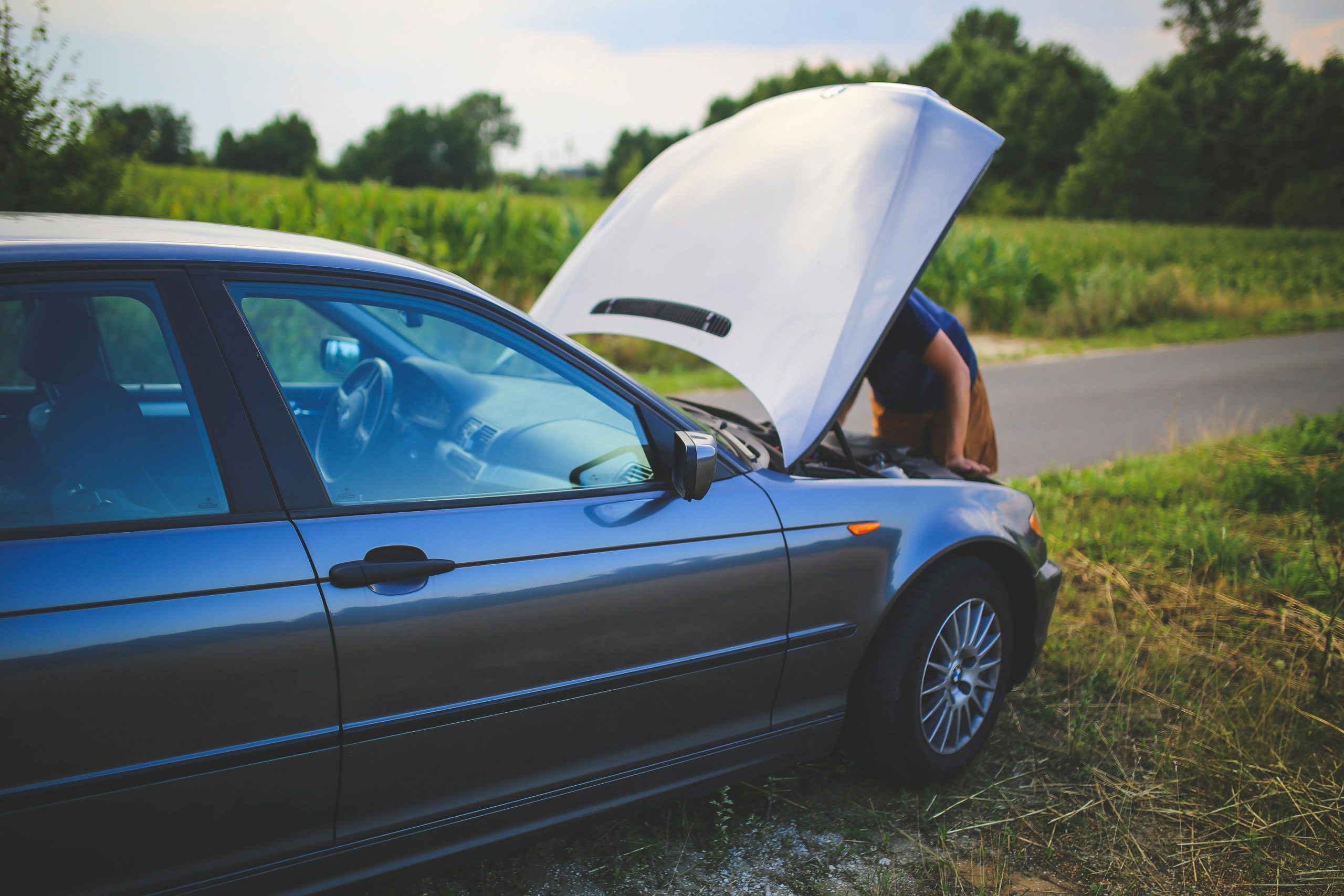
Not every no-start condition is a battery failure. Recognizing symptoms helps you choose the right solution.
Common dead battery symptoms:
- Clicking sound when turning the key
- Dashboard lights flicker or dim
- Engine cranks slowly
- Radio works but engine won’t start
- Completely silent ignition
Not likely a battery problem:
- Engine cranks normally but won’t start (fuel/ignition issue)
- Loud grinding noises (starter issue)
- Sudden stall while driving (charging system failure)
If you notice dim lights or clicking sounds, your battery likely needs a jump-start.
Step-by-Step: How to Jump-Start a Car
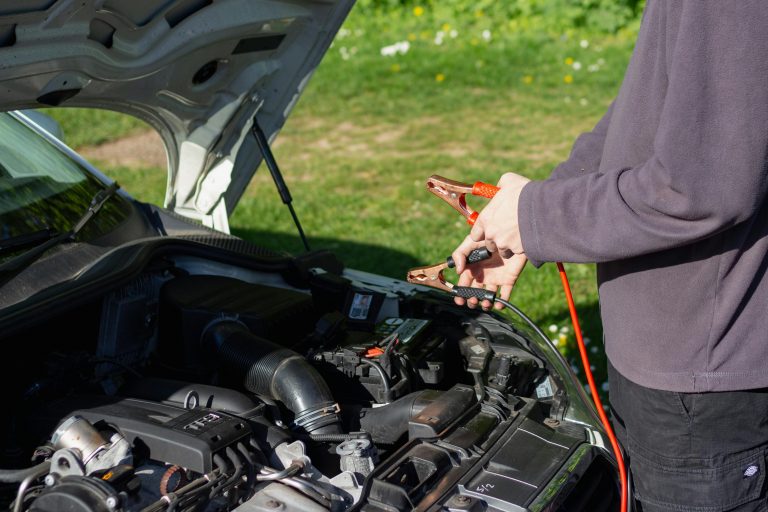
A jump-start is the fastest and most common fix. You will need jumper cables and a working vehicle.
Step 1: Position the Vehicles
Park the working car close enough so cables reach both batteries, but do NOT let the vehicles touch.
Turn both cars off before connecting cables.
Step 2: Connect Jumper Cables (Correct Order Matters)
Follow this exact order to avoid sparks or damage:
- Connect RED clamp to dead battery positive (+)
- Connect other RED clamp to working battery positive (+)
- Connect BLACK clamp to working battery negative (-)
- Connect final BLACK clamp to unpainted metal on dead car (NOT battery)
This grounding step prevents dangerous sparks near the battery.
Step 3: Start the Working Vehicle
Let the running car idle for 2–5 minutes.
This allows the dead battery to receive some charge before attempting a start.
Step 4: Start the Dead Car
Try starting the dead vehicle.
- If it starts → let it run
- If it clicks → wait a few more minutes
- If nothing happens → battery may be severely discharged
Do NOT crank continuously for long periods — this overheats the starter.
Step 5: Remove Cables in Reverse Order
Remove cables carefully:
- Black from metal ground
- Black from donor battery
- Red from donor battery
- Red from revived battery
Avoid clamps touching each other.
What To Do After the Car Starts
Starting the car is only part of the solution. The battery still needs charging.
Drive the vehicle for at least 20–30 minutes.
Why this matters:
- The alternator recharges the battery
- Short drives won’t restore enough power
- Turning off too soon may cause another failure
Avoid shutting off the engine immediately after jump-starting.
If the Car Won’t Start Even With a Jump
Sometimes jump-starting doesn’t work. This usually means the problem is deeper than a discharged battery.
Possible causes:
Bad battery
- Old batteries lose ability to hold charge
- Common after 3–5 years
Faulty starter
- Clicking but no cranking
- Grinding noises
Alternator failure
- Battery dies again quickly
- Warning light on dashboard
Corroded terminals
- Poor electrical connection
- Visible white/green buildup
At this point, you may need roadside assistance or towing.
What If Your Car Battery Keeps Dying?
If your vehicle starts after a jump but dies again soon, there is an underlying problem. Many drivers notice their car battery keeps dying every few days or overnight.
This usually points to one of three issues:
1. Parasitic Drain
Something is using power while the car is off.
Common culprits:
- Interior lights
- Dash cameras
- Phone chargers
- Faulty relays
- Aftermarket electronics
2. Weak Alternator
The alternator charges the battery while driving. If it fails, the battery drains continuously.
Signs include:
- Dim headlights while driving
- Battery warning light
- Car dies while running
3. Old Battery
Batteries naturally wear out. Even perfect charging systems cannot restore worn internal plates.
Emergency Tools Every Driver Should Carry
Being prepared turns a major problem into a minor inconvenience.
Must-have items:
- Jumper cables
- Portable jump starter
- Flashlight
- Gloves
- Phone charger
- Reflective warning triangle
Portable jump starters are especially useful because they eliminate the need for another car.
How Weather Affects Your Battery
Temperature plays a major role in battery performance, and many drivers don’t realize their battery struggles most during weather changes — not just extreme heat or cold. Batteries rely on chemical reactions to create electricity, and those reactions slow down or speed up depending on temperature. When conditions shift quickly between seasons, the battery has to work harder, which increases wear and raises the chance of failure.
Cold weather makes starting your car especially difficult because everything inside the engine becomes thicker and harder to move.
- Engine oil thickens, creating more resistance when turning the engine
- Battery output drops significantly, sometimes by 30–50%
- The starter motor needs more power to crank the engine
- Older batteries often fail on the first freezing morning
Hot weather is actually more damaging long-term, even if the car starts normally.
- Heat evaporates internal battery fluid
- Internal plates corrode and weaken faster
- Overcharging becomes more likely
- Overall lifespan shortens dramatically
Because of these effects, many batteries fail during seasonal changes like fall and spring. The battery weakened during summer heat often dies when winter arrives, leaving drivers surprised even though damage happened months earlier.
Preventing Future Battery Failures
Dead batteries rarely happen without warning. Preventive habits greatly reduce the chance of being stranded.
Weekly habits
- Drive longer trips occasionally
- Turn off electronics before parking
- Check interior lights
Monthly habits
- Inspect terminals for corrosion
- Watch for slow cranking
- Look for swelling battery case
Seasonal habits
- Test battery before winter
- Park in shade during summer
- Clean corrosion buildup
Prevention is easier and cheaper than emergency repairs.
When To Replace Your Battery
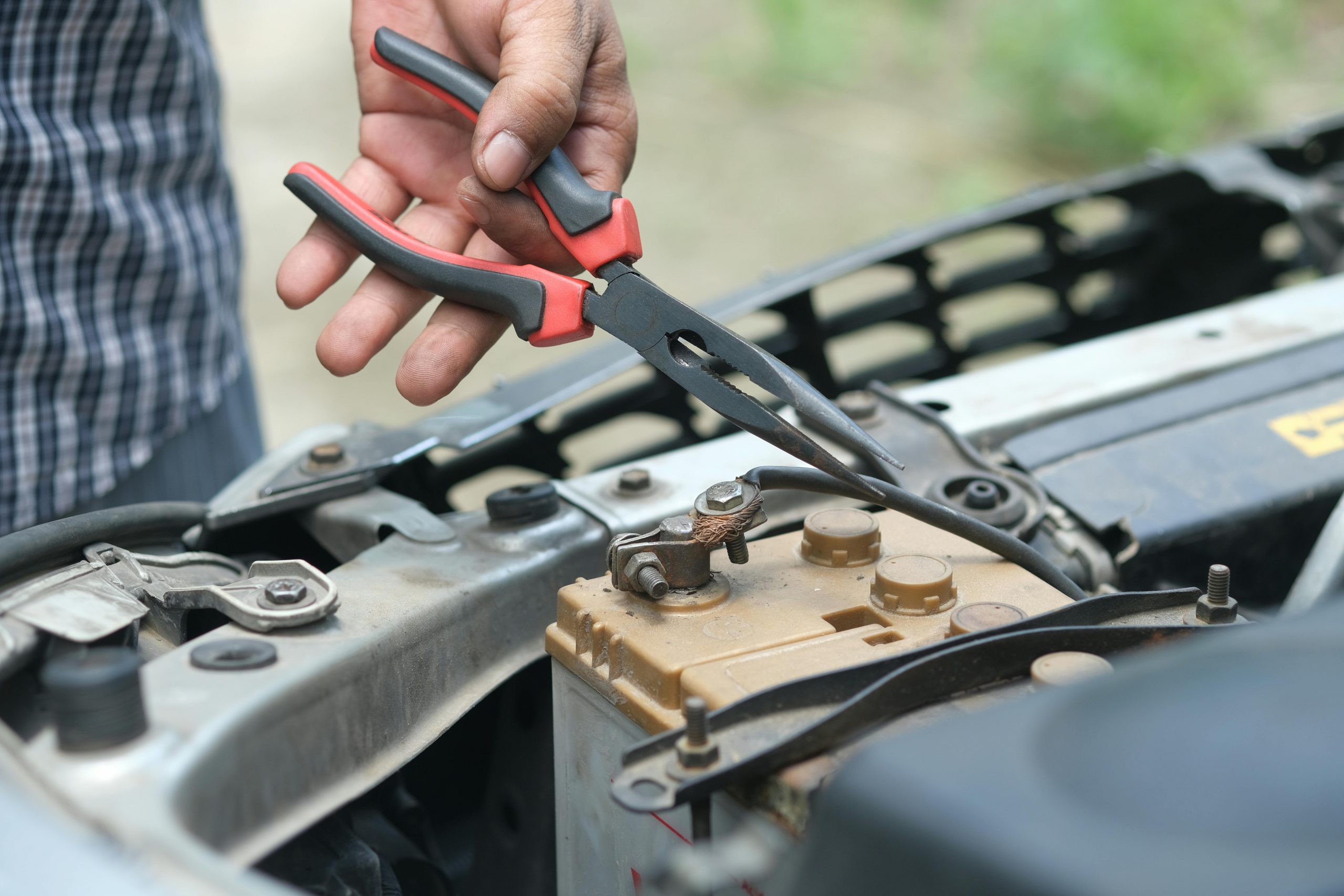
Most car batteries last 3–5 years. After that, reliability drops quickly.
Replace your battery if you notice:
- Frequent jump-starts needed
- Slow engine crank
- Swollen battery case
- Corrosion returning quickly
- Electrical glitches
Waiting too long often leads to unexpected breakdowns.
Roadside Assistance vs DIY Jump
Sometimes the safest choice is professional help.
Call roadside assistance if:
- You’re on a busy highway
- You smell burning
- Battery is cracked or leaking
- Jump-start fails multiple times
DIY jump-starts are safe only in controlled conditions.
Final Thoughts
A dead battery is inconvenient but manageable when you know what to do. Recognizing symptoms early, jump-starting correctly, and driving long enough afterward can get you moving again quickly.
More importantly, repeated failures usually point to deeper issues like aging batteries, alternator problems, or electrical drains. Addressing the root cause prevents future breakdowns and protects your vehicle’s reliability.
With the right knowledge and a few simple tools, you can turn a stressful moment into a routine fix — and avoid being stranded the next time your car refuses to start.
About the Author